As organizations move their registers, attendance on cards, etc., to more electronic forms, biometric attendance systems have emerged as the most reliable and secure choice. These systems identify individuals through their distinctive biological or behavioral features, thereby ensuring accuracy of attendance and eliminating the possibility of time fraud.
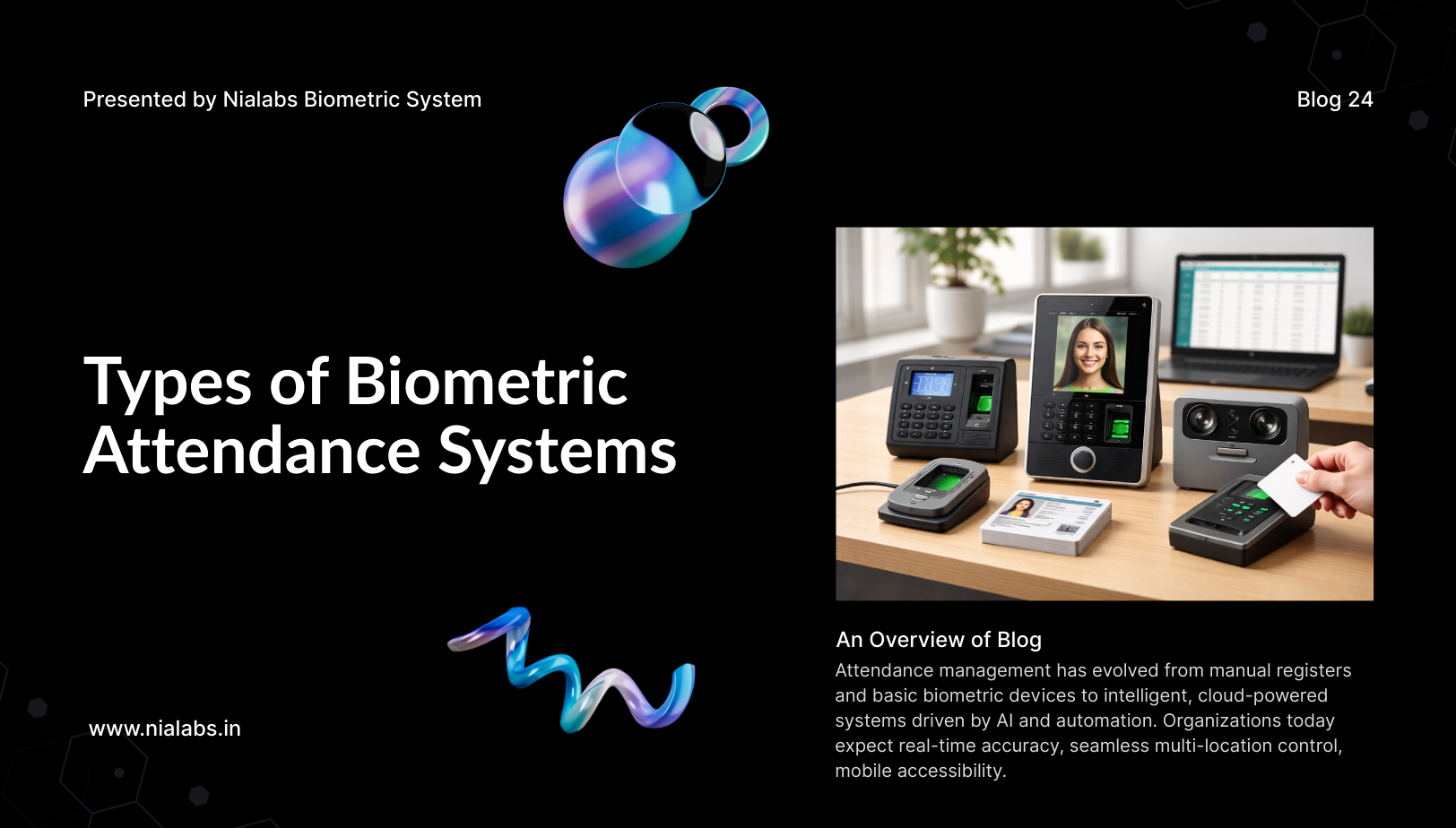
There are different kinds of biometric attendance systems designed to fit different premises, security needs, and workforce patterns. Being aware of these types helps organizations choose a suitable solution for their business.
Major Types of Biometric Attendance Systems
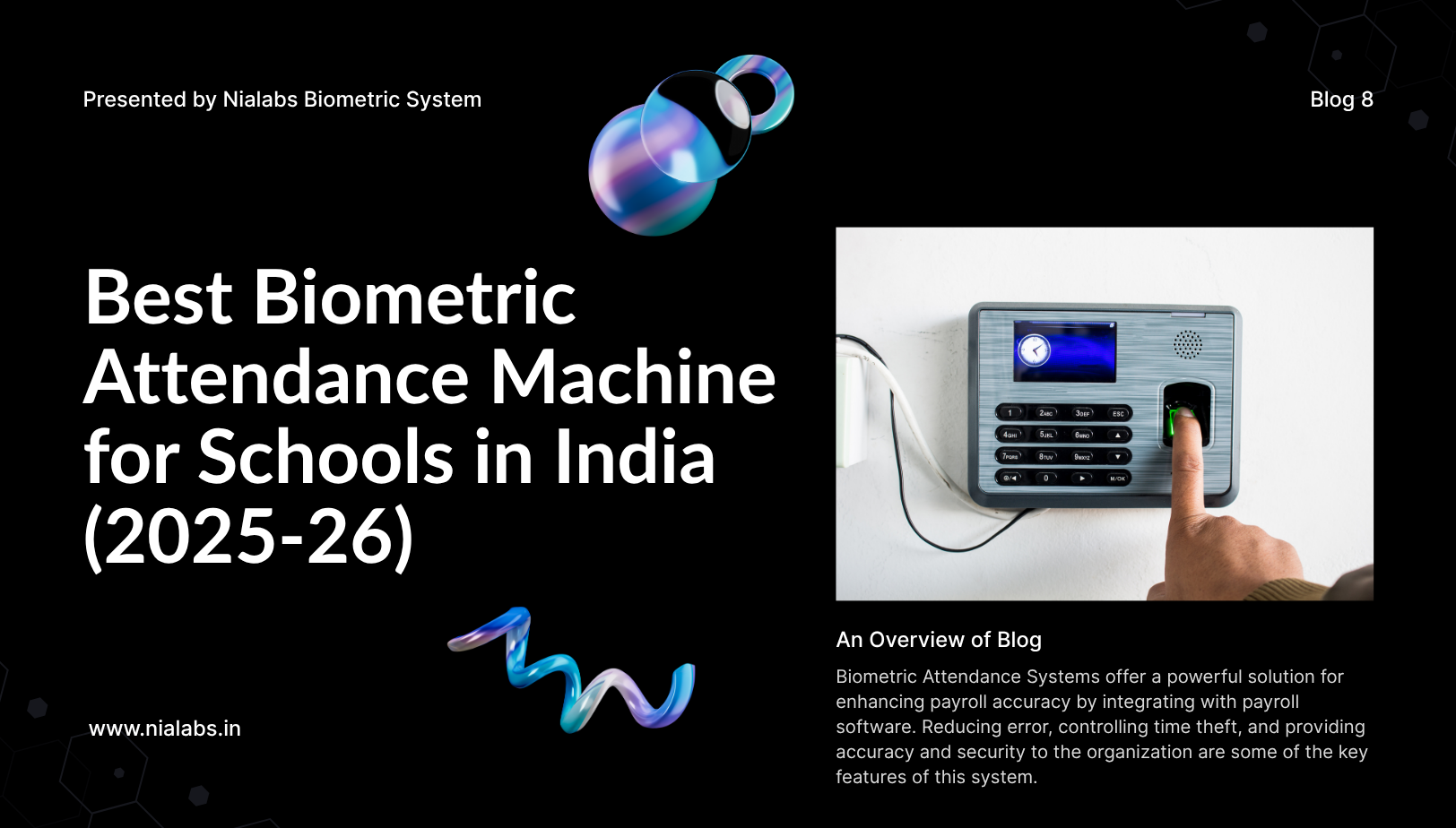
1. Fingerprint-Based Biometric Attendance System
Fingerprint recognition system is the leading biometric technology, and the fingerprint sensor market is the largest among biometric sensors. It works by taking the unique pattern of the finger and then matching it with the pre-stored templates.
Main features:
-
Accurate daily attendance
-
Authentication rate is high & quick
-
Cost-effective & easy to implement
-
Has proved its effectiveness for fixed workplaces
Best suited for:
This product is suitable for offices, factories, schools, warehouses, and small and medium-sized enterprises.
Limitations:
The sensor can have trouble with eroded fingerprints in the presence of a certain amount of dust or humidity in the factory environment.
2. Facial Recognition Attendance System
Face recognition attendance system use AI-enabled cameras to capture and identify a person’s face by analyzing the eye distance, jawline, facial contours, etc. This is a contactless biometric solution, and that is why it is gaining popularity.
Main features:
-
Touch-free and hygienic
-
Enables fast, on-the-spot identity confirmation
-
Compatible with mask wearing
-
Excellent for high foot traffic areas
Best suited for:
Corporate offices, hospitals, schools, and IT parks
Limitations:
Dim light or severe face occlusion can degrade the accuracy of the baseline model.
3. Iris Recognition-Based Attendance System
Iris Recognition attendance system is a method of identifying individuals by using the unique patterns of the colored ring of an eye. It also happens to be one of the most secure biometrics technologies available.
Main features:
-
Extremely high accuracy
-
Hard to counterfeit
-
Long-term stability of biometric data
Best suited for:
Government, research labs, and military agencies.
Limitations:
More expensive and some user cooperation is needed while scanning.
4. Palm Vein Biometric Attendance System
Palm vein systems apply a mixture of infrared light and pressure to capture vein patterns beneath the palm skin. Since the biometric patterns are inside the body, a higher level of encryption can be obtained.
Main Features:
-
Contactless or short-distance operation
-
Highly secure and clean
-
Even though the surface of the skin is broken
Best suited for:
Hospitals, banks, and corporate office which need high security
Limitations:
More costly hardware than a fingerprint-based system
5. Voice Recognition Attendance System
Voice recognition attendance system recognize individuals by comparing various features of their voice tone, pitch, and speaking patterns. These systems are often used in situations where there is no requirement to be at a device.
MainFeatures:
-
Permits distance and telephone participation
-
No contact with the device
-
Perfect for distributed teams
Best suited for:
Call centers, work at home, voice-enabled system
Limitations:
Background noise and various speakers may affect the quality of recognition.
6. Mobile Biometric Attendance System
Such applications enable employees to take attendance on their mobile phones using fingerprint or face recognition with GPS or geo-fencing.
MainFeatures:
-
Suitable for mobile attendance
-
Time & location stamped records
-
Cloud-based access
Best suited for:
Field staff, sales team, construction site, remote workforce
Limitations:
Smartphones and a stable internet connection are needed to operate.
7. Multi-Modal Biometric Attendance System
Multi-modal systems consist of integrating two or more biometrics, such as the combination of fingerprint and face recognition, it provides better accuracy and reliability.
MainFeatures:
-
Higher success rates for authentication
-
Reduced the false acceptance rate or false rejection rate
-
Customizable for different user groups
Best suited for:
Large enterprises, factories, and organisations with varied employees
Limitations:
More costly to install than a single-mode system.
Benefits of Biometric Attendance System
Advanced biometric attendance solutions not only enhance the accuracy of attendance but also enable the organization to become compliant, transparent and efficient. The management has better visibility into the workforce patterns like late comers, unattended work, overtime and absenteeism as data are captured in real-time and reports are automated.
When connected with HR and payroll systems, biometric attendance decreases the administrative effort even further and guarantees error-free salary processing- a worthwhile investment for expanding organizations.
Choosing the right type of Biometric Attendance System
The choice of the appropriate biometric attendance for organizations will depend on the following aspects:
-
Hygiene and security needs
-
Weather condition
-
Budget and scalability requirements
At Nialabs, biometric attendance solutions are customized to support multiple biometric modalities integrates seamlessly with HRMS and payroll systems, and are cloud-based, monitored, enabling enterprises to select what works best for them.
Conclusion:
Biometric attendance systems are not a one-size fits all solution. From fingerprint and face recognition to iris, palm vein and mobile solutions, each has a specific focus on a certain business requirement. Having a clear idea about various types of Biometric attendance technology, firms can take better decisions that can enhance the accuracy, security and work force productivity.