
Payroll accuracy is a crucial matter for any organisation. An organisation's reputation is built on many pillars, and payroll is one of them. Accurate payroll builds employee satisfaction and strengthens mutual trust between employees and the company. It also improves the company's financial health by managing salaries effectively.
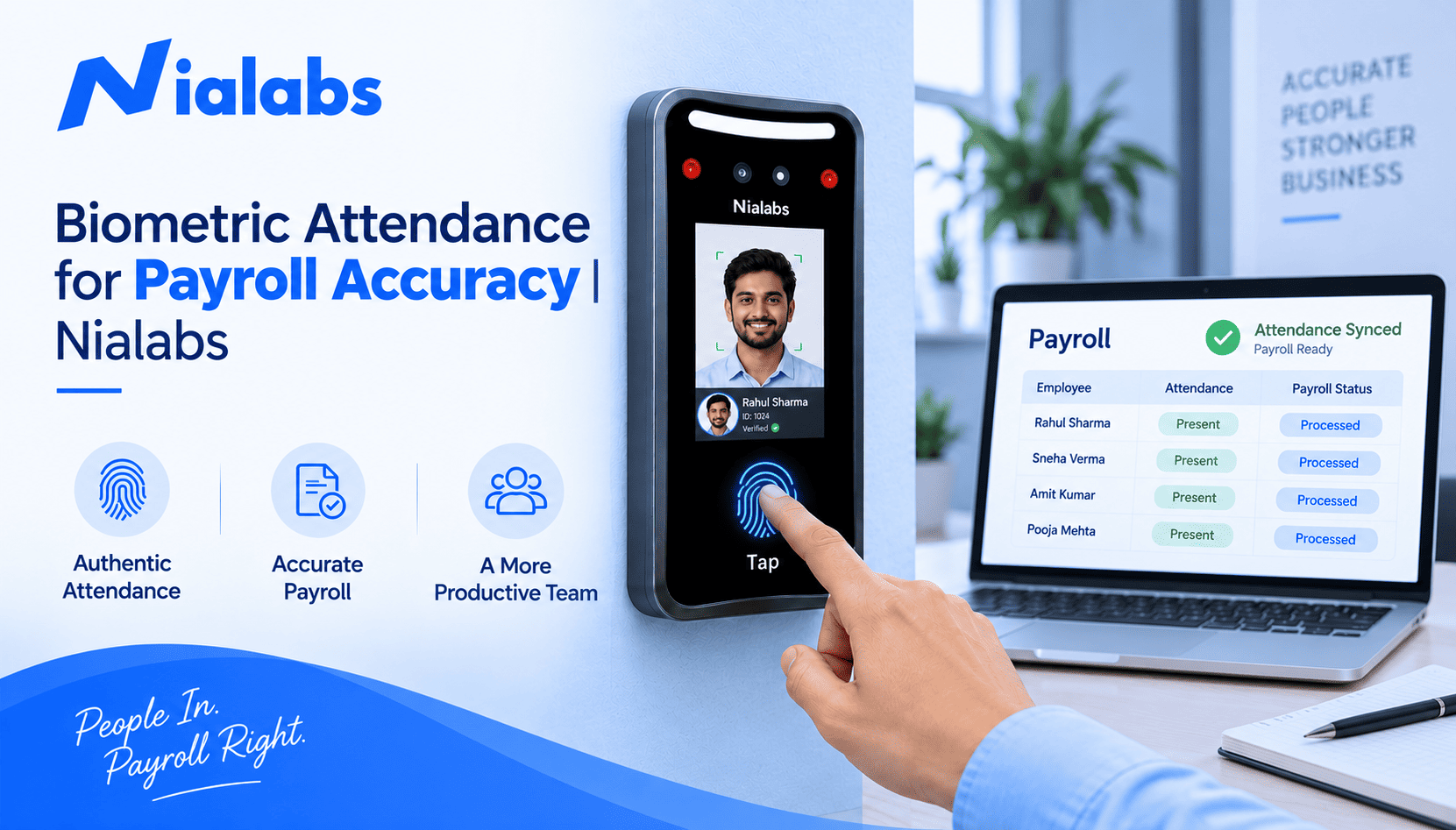
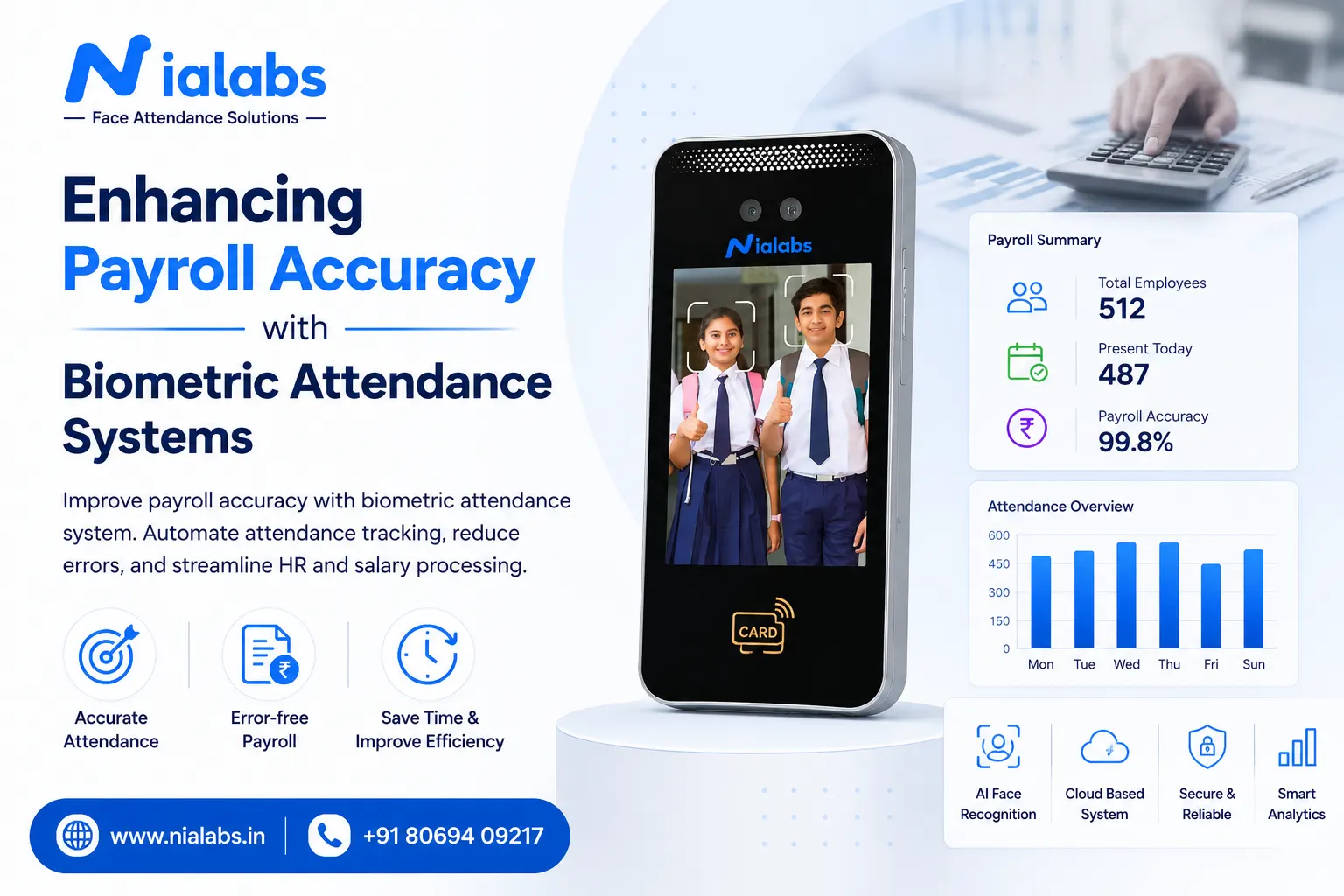
The traditional system of attendance is outdated and carries a real drawback: it does not support accurate payroll management. Biometric machines are more advanced and provide far greater accuracy in managing employee payroll. Businesses should consider implementing biometric attendance systems to improve accuracy, and with this updated technology, operations run smoother across the board.
What Is a Biometric Attendance System?
Biometric attendance systems use an individual's unique identity features to mark employee attendance, relying on biological and physical traits to verify identity and helping keep accurate records of employee data. For a full walkthrough of how the technology works end to end, see our guide on how a biometric attendance system works. This automated process ensures attendance data is accurate, secure, and easily integrated with other management systems, including payroll.
Key Features of Biometric Attendance Systems for Payroll Accuracy
Accuracy
These machines are more accurate than traditional time and attendance methods. They help prevent buddy punching, a significant problem in manual systems, and support better overall management of the workforce.
[Insert a verified accuracy figure here if available, e.g. device-level face or fingerprint recognition accuracy, sourced from your own spec sheet.]
Convenience
With easy access, these machines are more convenient and help employees quickly clock in and clock out. There is no fear of losing an ID card or forgetting it somewhere, and nothing extra to carry.
Security
Biometric machines are more secure than any other attendance method. They are difficult to replicate, which protects sensitive employee data, and they prevent unauthorised access to company premises. Pairing biometric attendance with a full access control system extends this protection to every door and gate on site, not just the attendance register.
Integration
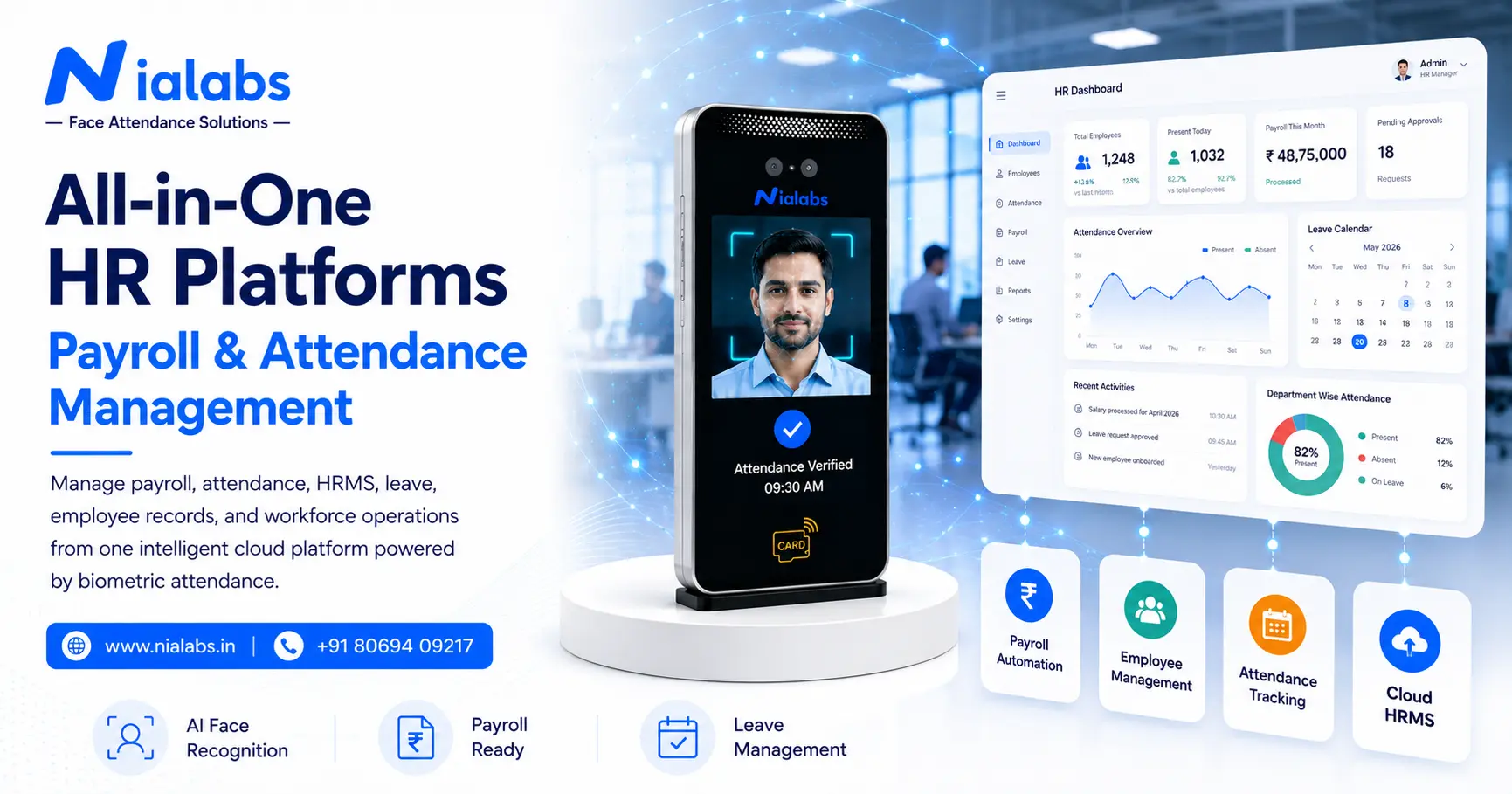
Biometric attendance machines integrate with other software to increase company productivity, helping reduce labour costs and manage payroll from a single, connected system.
Data Storage
Data is stored securely on these machines, encrypted and safe. This data can be used to monitor employees, maintain precise records, and manage accurate salaries.
Why Payroll Accuracy Matters for HR and Workforce Management
Income is a fundamental part of an employee's job. Accurate, timely payroll builds satisfaction and trust, and there is no bigger achievement for a company than a genuinely satisfied workforce. Without accurate and timely payroll, employees start looking elsewhere, and no company wants to lose its most important asset.
1. Employee Satisfaction
With payroll accuracy in place, employees feel their work is properly valued. Salary is the crucial exchange for their time, and they expect it to reflect the work they actually do.
2. Compliance and Legal Issues
Organisations need clean records that follow all applicable labour regulations. Getting payroll wrong, whether through inaccurate calculations or unwanted deductions, risks fines, penalties, and potential lawsuits.
3. Financial Management
With no time theft and accurate tracking of working hours and overtime, payroll can be managed efficiently. Biometric attendance systems help prevent financial losses, freeing up resources that can be redirected toward productivity elsewhere in the business.
4. Company Reputation
Payroll accuracy is one of several factors that shape a company's reputation. Poor payroll management puts the company at risk of a bad reputation in the industry, and repeated violations can draw scrutiny from local tax authorities.
5. Talent Retention
Payroll accuracy helps a company retain the team it has built. Employees who are paid well and on time stay loyal, which is directly productive for the business.
How Biometric Attendance Systems Ensure Payroll Accuracy and Compliance
1. Eliminates Buddy Punching
The biggest drawback of traditional attendance systems is buddy punching, where an employee takes unnotified leave, and a colleague punches their card in their place. Left unchecked, this proxy attendance problem costs the company real money over time, since payroll ends up compensating hours nobody actually worked.
2. Reduces Human Error
Biometric attendance systems primarily reduce human error by automating the entire process. With no manual work required, incorrect entries become nearly impossible, and payroll errors that stem from bad data entry effectively disappear.
3. Real-Time Data Integration
Biometric attendance systems monitor data in real time, updating every second. This real-time integration supports timely payroll without delays, since HR and payroll teams can access current information whenever they need it.
4. Streamlines Overtime Calculations
Manually handling attendance and payroll is tedious, and a single minute-level error can alter the entire calculation, leading to incorrect payroll data and delays. Biometric attendance systems ensure accurate, timely payroll with no confusion between employee and employer.
Conclusion
The business world is evolving rapidly, and organisations need stable systems to streamline operations and manage their workforce smoothly. Biometric attendance systems offer a genuine path to better payroll accuracy, since they integrate easily with current payroll software. These systems build trust and efficiency across an organisation by cutting human error and time theft while strengthening security.
When it's time to update your attendance and payroll systems, a biometric system is a sound investment with tangible results. Nialabs provides biometric timekeeping systems built to improve payroll accuracy, raise employee satisfaction, and strengthen overall organisational performance.
Frequently Asked Questions
1. How does a biometric attendance system improve payroll accuracy?
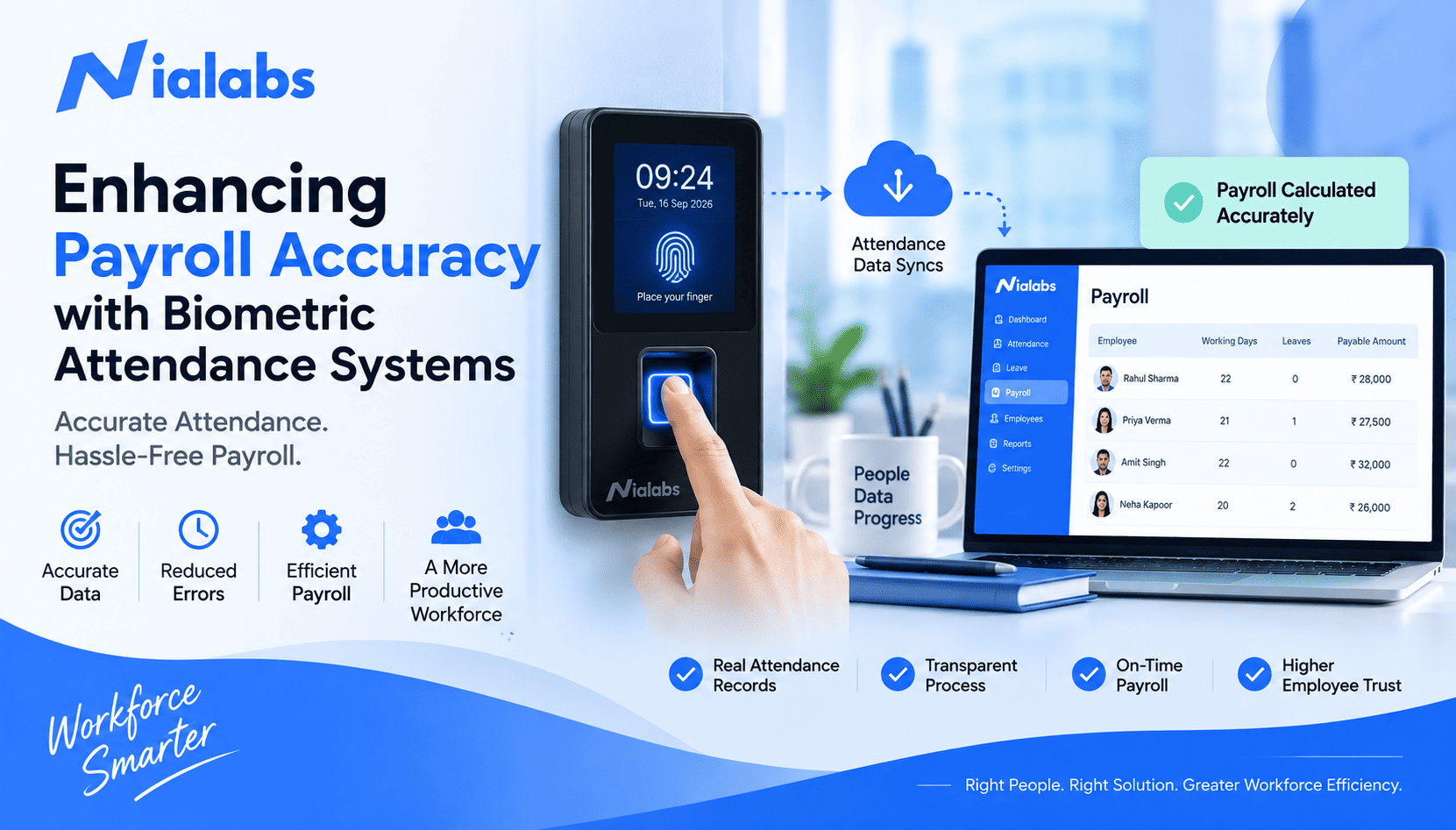
A biometric attendance system records employee attendance using face recognition or fingerprint authentication, eliminating manual errors and buddy punching. Attendance data syncs automatically with payroll software, ensuring precise salary calculations and fewer discrepancies.
2. Can a biometric attendance system integrate with payroll software?
Yes. Modern biometric attendance systems integrate seamlessly with HRMS and payroll software, automatically transferring attendance records for salary processing, overtime calculations, leave management, and compliance reporting.
3. Why is biometric attendance better than manual attendance for payroll?
Manual attendance is prone to errors, proxy attendance, and inaccurate records. A biometric attendance system provides real-time, tamper-proof attendance data, helping HR teams process payroll faster while cutting mistakes and fraud.
4. Which industries benefit most from biometric attendance and payroll integration?
Biometric attendance systems are widely used in offices, manufacturing units, hospitals, schools, retail stores, warehouses, logistics companies, and government organisations where accurate attendance directly impacts payroll and workforce management.
5. Does a biometric attendance system reduce payroll fraud?
Yes. By verifying employee identity through AI face recognition or fingerprint authentication, biometric attendance systems prevent buddy punching and unauthorised attendance, helping organisations reduce payroll fraud and improve workforce transparency.
6. What features should I look for in a biometric attendance system for payroll?
Choose a biometric fingerprint attendance system or face-recognition device that offers AI face recognition, fingerprint authentication, cloud-based attendance management, HRMS and payroll integration, real-time reporting, leave management, and secure data storage for efficient payroll processing.